Updated: September 28, 2026
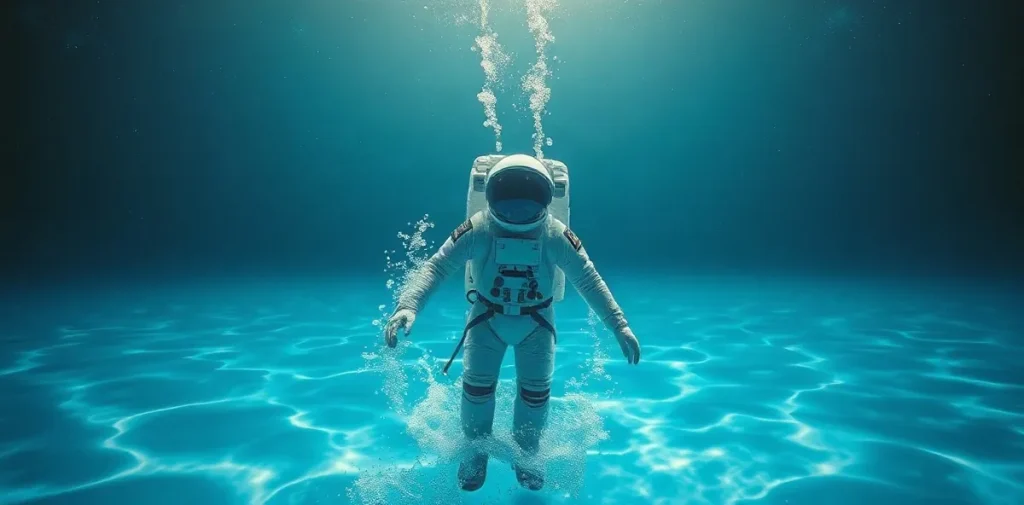
In recent years, astronaut training for deep space missions has become increasingly complex and diverse. One of the most effective training methods is underwater practice, which allows simulation of microgravity conditions and studying interaction with equipment in extreme environments. Underwater training helps not only to develop physical skills but also to enhance teamwork, which is crucial for successfully completing tasks in space.
Astronauts immerse themselves in specialized pools where they can rehearse various scenarios, including spacewalks and handling scientific instruments. This unique experience enables them to adapt to conditions they will face during their missions. In this article, we will take a detailed look at how underwater training impacts astronaut preparation and why it is so important for future expeditions beyond our planet.
| Task | Description | Goal |
|---|---|---|
| Isolation | Training under isolation conditions | Preparation for long-duration missions |
| Health | Monitoring astronauts’ health | Maintaining psycho-emotional state |
| Technology | Use of new technologies | Improving team interaction |
NEEMO Project: Key Information
The NEEMO project (NASA Extreme Environment Mission Operations) was launched in 2001 and includes over 20 expeditions conducted in the Aquarius underwater laboratory. This lab, located 18 meters beneath the ocean surface, offers a unique opportunity for astronauts and scientists to conduct research in conditions closely resembling deep space. Each mission lasts from 8 to 14 days, allowing participants to experience the physical and psychological stresses that may arise during long-duration spaceflights.
- Lab depth: 18 meters
- Mission duration: 8 to 14 days
- Number of expeditions: more than 20
Project Goals and Objectives
The primary goal of NEEMO is to test and refine technologies that will be used in future missions to Mars and other planets. Additionally, the project investigates methods of team interaction in conditions of isolation and confined spaces, which is critically important for the success of deep space missions.
Training Goals and Objectives
Underwater astronaut training aims to develop interaction skills in conditions of isolation and limited space, which is especially relevant for upcoming deep space missions. Water provides a unique simulation of weightlessness, allowing crews to practice necessary actions and teamwork in scenarios that may arise during long flights, such as the Mars mission planned for 2026. The duration of such a flight can reach up to 9 months, making preparation for potential stressful situations essential.
Participant Condition Monitoring
Modern technologies are used to assess astronauts’ health and psycho-emotional states. For example, NASA’s Vital Signs Monitoring System tracks physiological parameters of trainees, such as heart rate and stress levels. This data helps prevent potential issues before they occur. Participation in underwater training like NEEMO involves an investment of about 500,000 rubles per cycle, covering equipment and specialists’ labor costs.
- Training duration: up to 21 days
- Number of participants: 4–6 people per team
- Water volume for training: 120,000 liters in the underwater lab
Technical Aspects of Underwater Training
Underwater training at the Aquarius lab, located in Florida, features unique technical characteristics. This 12 by 3 meter module provides an ideal environment to simulate conditions astronauts will encounter in space. Water temperature in the lab ranges from 24 to 28 degrees Celsius, maintaining comfortable conditions for extended training sessions. The life support system inside Aquarius maintains oxygen levels at 21%, which corresponds to the norms necessary for comfortable breathing, allowing astronauts to stay underwater for up to 18 days without needing to surface.
Equipment and Technologies
Modern equipment ensures safety and training effectiveness. For example, a special underwater suit developed by NASA provides protection and comfort during deep dives. These suits cost around $5,000 each, highlighting the high expenses involved in preparing astronauts for missions.
- Water temperature: 24–28 °C
- Oxygen level: 21%
- Maximum underwater duration: 18 days
- Underwater suit cost: about $5,000
Project Funding and Support
The NEEMO project, which prepares astronauts for deep space missions, has an annual budget of about $3 million. The primary funding sources are NASA and the US National Oceanic and Atmospheric Administration (NOAA). These organizations jointly support the program, which focuses on exploring the underwater environment as an analog to space conditions, enabling astronauts to practice necessary skills under limited visibility and high humidity.
Involvement of Educational Institutions
Within the NEEMO program, the University of Florida actively collaborates by providing scientific research and technologies to improve the training process. This partnership significantly contributes to developing new training methods that help ensure the success of future missions.
- Project budget: $3 million per year;
- Main sponsors: NASA and NOAA;
- University involvement: University of Florida providing research;
Missions Inspired by NEEMO
Missions inspired by NEEMO (NASA Extreme Environment Mission Operations) play a key role in preparing astronauts for future deep space expeditions. NEEMO offers a unique opportunity to simulate conditions expected on Mars and the Moon. For example, in 2026, the Artemis II mission is planned, which will send a four-person crew into lunar orbit. This will be an important step before upcoming Mars missions in the 2030s, where astronauts will conduct long-term research under conditions of limited resources and complex logistics.
Preparation for Mars Missions
Research conducted during NEEMO helps identify key aspects of Mars mission preparation, including psychological resilience and team interaction. Experiments show that extended isolation (up to 30 days) underwater demands a high degree of cooperation and stress management skills from participants, which is critically important for mission success on Mars. As part of Artemis II preparation, NASA uses the Orion spacecraft, which costs about $1.5 billion per unit.
- Mission duration: up to 30 days
- Crew size: 4 people
- Orion development cost: $1.5 billion
- Psychological training: stress resilience assessment
- Isolation conditions: simulation of Mars environment
Frequently Asked Questions
How long does a NEEMO underwater mission last?
Where is the Aquarius underwater laboratory located?
Who funds the NEEMO project?
Key Takeaways
- The NEEMO project started in 2001 and includes over 20 missions.
- The Aquarius laboratory is located 18 meters underwater in the ocean.
- The project’s budget is about $3 million per year.