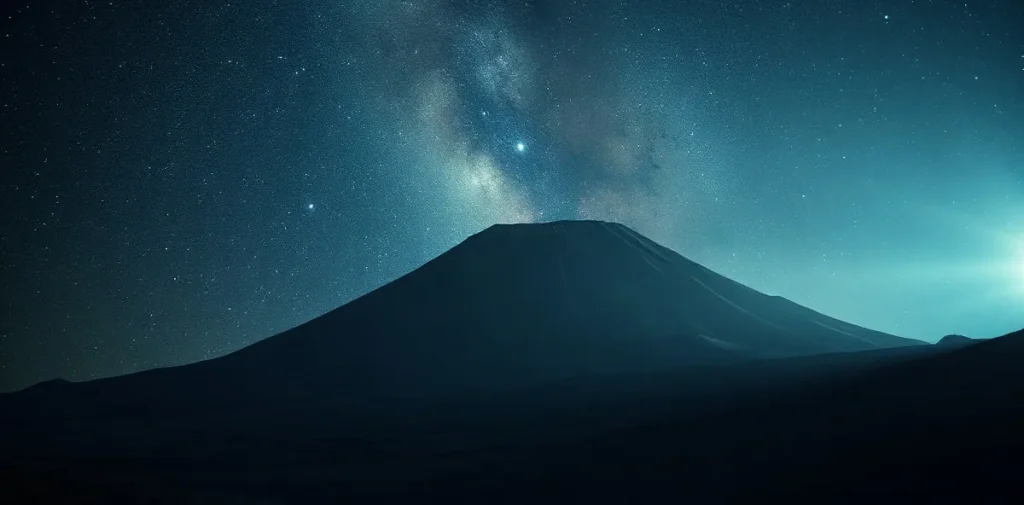
You can watch meteor showers without a telescope: choose a dark place with an open sky and look around rather than through an instrument—that way, more meteors will fall within your field of view. Nights when a shower peaks are especially convenient, but you can see a “shooting star” on other dates too.
Meteors are streaks of light produced by particles entering Earth’s atmosphere. A telescope isn’t needed here: it covers only a small patch of sky, while a wide view is more useful to an observer. This article explains how to prepare for observing and what to consider when choosing a night.
| Condition | What changes | Practical solution |
|---|---|---|
| Urban light pollution | Faint meteors are less noticeable | Move away from bright streetlights |
| Bright Moon | Faint streaks are lost against the bright background | Take the Moon’s phase into account |
| Cloud cover | Some or all of the sky is obscured | Check other nights during the shower’s activity period |
| Narrow telescope field of view | Fast streaks are harder to spot | Observe with the naked eye |
- 1 shared radiant — a defining feature of a meteor shower
- 0 telescopes needed to observe meteors with the naked eye
- several nights a possible observing window around peak activity
How does a meteor shower differ from sporadic meteors?
A meteor shower differs from sporadic meteors because its meteors share a radiant: its particles were left behind by a comet or asteroid, and when Earth crosses this region of space, the meteors appear to emerge from a single point. A meteor is a streak of light produced when a small body enters Earth’s atmosphere; this streak is also called a “shooting star.”
How to identify a shower
A shower’s name is usually linked to the constellation where its radiant is located—the point from which the meteors appear to spread out to an observer. For example, if the radiant is in the constellation Perseus, the shower is named after Perseus. The radiant helps distinguish a shower from sporadic meteors, but you don’t have to look directly at it: meteor trails can be visible in other parts of the sky too.
- Shower meteor: appears to be associated with a shared radiant and occurs when Earth passes through a region of particles left behind by a comet or asteroid.
- Sporadic meteor: is not associated with a shower’s shared radiant and can appear in any direction.
When should you go out to observe?
Go out during the activity period of a particular meteor shower, choosing the peak night or nearby nights when the radiant is above the horizon and the Moon is not too bright. Check a current astronomical calendar for the exact date and time of the peak in the year you’re interested in: they vary by shower and by Earth’s position.
The peak isn’t the only suitable night
The peak is a night or brief interval when more meteors are expected, but a shower may be visible both before and after it. So missing one date doesn’t necessarily mean it’s too late to observe: check the shower’s activity period and choose a suitable night within it.
Consider two factors when choosing a time:
- Radiant: check whether it has risen above the horizon during your observing hours; observing the shower is harder while the radiant is below the horizon.
- Moon: compare the date with the Moon’s phase. Bright moonlight reduces the visibility of faint meteors, so, all else being equal, choose a night when the Moon is less bright.
How do you choose a location and direction?
Choose a spot with an open view of the sky and minimal artificial light: stay away from streetlights, shop windows and illuminated roads, which make faint meteor trails harder to see. Compare a site outside a brightly lit city center with a more convenient observing spot: favor the one where buildings and trees block less of the horizon.
Before observing
- Lighting: check whether streetlights or light from shop windows fall within your field of view; even an open area loses its advantage if bright light sources are nearby.
- View: choose a spot where buildings and trees don’t block most of the horizon, so you can see more of the sky.
- Direction: don’t keep looking directly at the radiant—meteors can leave trails far from it too.
- Conditions and access: check the cloud cover and whether the site is accessible in advance; you’ll need clear skies, a safe route and somewhere you can comfortably stay.
What do you need if a telescope isn’t necessary?
Comfort matters more than optics
To watch a meteor shower, you’ll need your naked eye, warm clothes, a blanket or folding chair, and water; a telescope isn’t needed. A wide field of view makes it easier to spot flashes in different parts of the sky, whereas an eyepiece shows only a small area.
- The naked eye lets you take in a wide area of sky without trying to keep it in an eyepiece.
- A blanket or folding chair helps you observe while staying comfortably still.
- Warm clothes and water come in handy when you’re sitting outdoors for a long time.
- Paper or a phone can be used for notes; a bright phone screen makes it harder for your eyes to stay adapted to the dark.
Meteors appear as individual flashes, not as a continuous stream, so there may be quiet intervals between them. Paper notes don’t give off bright light; if you use a phone, check your notes briefly and don’t hold the screen in front of your eyes.
Why might the observing experience fall short of expectations?
Watching a meteor shower may be disappointing if clouds cover the sky, urban light pollution gets in the way or the Moon is bright: these conditions hide faint trails even during the shower’s activity period. The fact that the expected peak has arrived doesn’t guarantee lots of bright flashes—the experience depends on the weather and the observing location.
Light pollution and expecting flashes too often
The naked eye takes in only part of the sky, and meteors can appear in different areas, so it’s easy to miss some trails. A telescope doesn’t solve this problem: its narrow field of view makes fast meteors harder to observe, and it’s less useful than the naked eye for scanning the sky.
- Cloud cover: obscures parts of the sky and can make observing impossible.
- Urban light pollution and a bright Moon: make faint meteors harder to see.
- Shower peak: marks a period of increased activity, not a promise of frequent bright trails.
One unsuccessful night doesn’t mean the shower is inactive. Before trying again, check the activity period, the weather forecast and whether the radiant will be visible: if clouds or viewing conditions are a problem, choose another night within the activity period.
How can you observe safely and avoid missing meteors?
To observe meteors safely without a telescope, choose a familiar spot away from cars and bright streetlights, plan your route home in advance, and settle in where you can see most of the open sky. Don’t stand in the road or approach an unprotected edge of a slope.
Your eyes need time to adjust to the dark, so don’t turn on your phone’s bright screen unless necessary: its light makes faint meteors harder to spot. It’s more convenient to watch a wide area of sky than to follow each trail with your eyes—this makes it easier to notice the next meteor as it flashes.
What to prepare in advance
- Route: choose a familiar spot and plan your way back in advance; don’t observe near the unprotected edge of a slope.
- View: find a spot with a clear view of most of the sky, where you won’t need to keep tracking individual trails.
- Conditions: allow plenty of time, look for clear weather and stay away from bright light sources. Patience matters: meteors don’t appear on a schedule.
Frequently asked questions
Do you need a telescope to watch a meteor shower?
Do you have to look directly at the radiant?
Can you see a shower from a city?
What should you do if it’s cloudy on the peak night?
